
Research Training Group 2530
RTG2530Biota-mediated effects on Carbon cycling in Estuaries
Photo: UHH/Denstorf
16 March 2026, by RTG 2530
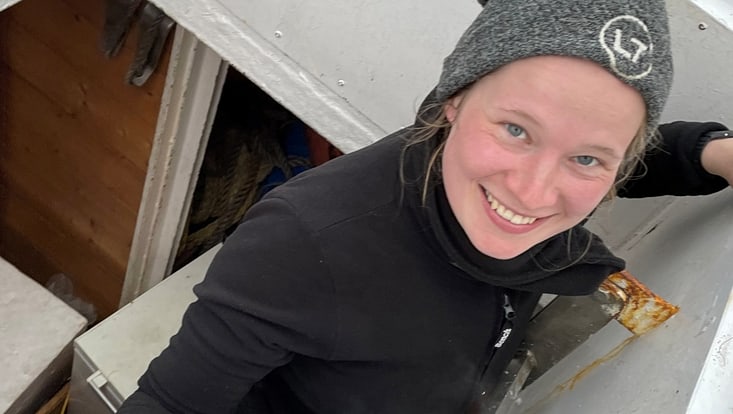
Photo: UHH/RTG2530/Koll
What comes next after completing the doctoral thesis? At our Alumni Talks, doctoral researchers in the Research Training Group have the opportunity to hear from former colleagues about their journeys after completing their PhDs – and the experiences that have particularly shaped them. These talks also highlight the diversity of possibilities, as the alumni are active in very different fields. At the Alumni Talks on 27 February 2026, Elena Hauten shared insights into her current role and the path that led her there. We’d like to thank her for her time and are delighted that we also had the chance to interview her afterwards.
I am currently working as a postdoctoral researcher at the Institute for Marine Ecosystem and Fisheries Sciences (IMF) at the University of Hamburg. As part of the ‘NikoFin’ project (survey and assessment of non-commercially exploited fish species in the North Sea), I am planning research cruises to the Sylt outer reef. In doing so, I am in close contact with our cooperation partner, the Federal Agency for Nature Conservation (BfN), as well as with the scientists working on the various work packages. In our project, we use methods that are as gentle and minimally invasive as possible to survey fish stocks, with the aim of eventually replacing traditional fisheries methods for monitoring fish in the long term. Our main focus here is on the Sylt Outer Reef nature reserve and the food webs found there. In addition to coordinating the research cruises, I also work on our ‘Trophic Ecology’ work package, which deals explicitly with processes within the food chain.
UHH/RTG2530/Biederbick
Overall, I appreciate the variety of my work, which combines office, laboratory and fieldwork. In the process, I get to learn about various techniques I haven’t encountered before. The research cruises also offer the opportunity to try out new ideas and gain insights. This means I’m constantly learning and can pick up new methods. What’s more, I have an excellent team with whom I have fun even on long working days.
I previously completed my PhD at the IMF, and afterwards it was clear to me that I wanted to stay in academia for the time being. The postdoc position then came about by chance. I was lucky.
I find academic work particularly appealing because, when you work in academia, you literally create ‘new knowledge’. As a curious person, I enjoy finding out how ecological processes work. I enjoy identifying gaps in knowledge that have not yet been filled, conducting research and developing methods to close precisely those gaps. This allows for a fairly unrestricted approach and requires you to work in a goal-oriented, creative and team-based manner. As a result, the work is varied; it can be demanding at times, of course, but it’s also enjoyable.
I’d already realised that I’d like to stay in academia. That said, I would have taken a different job if it had been thematically in line with my previous work and had a connection to fish. For me, it’s important to have a varied role and a sense of purpose in my work. I also find museum work, science journalism and the work of NGOs very exciting.
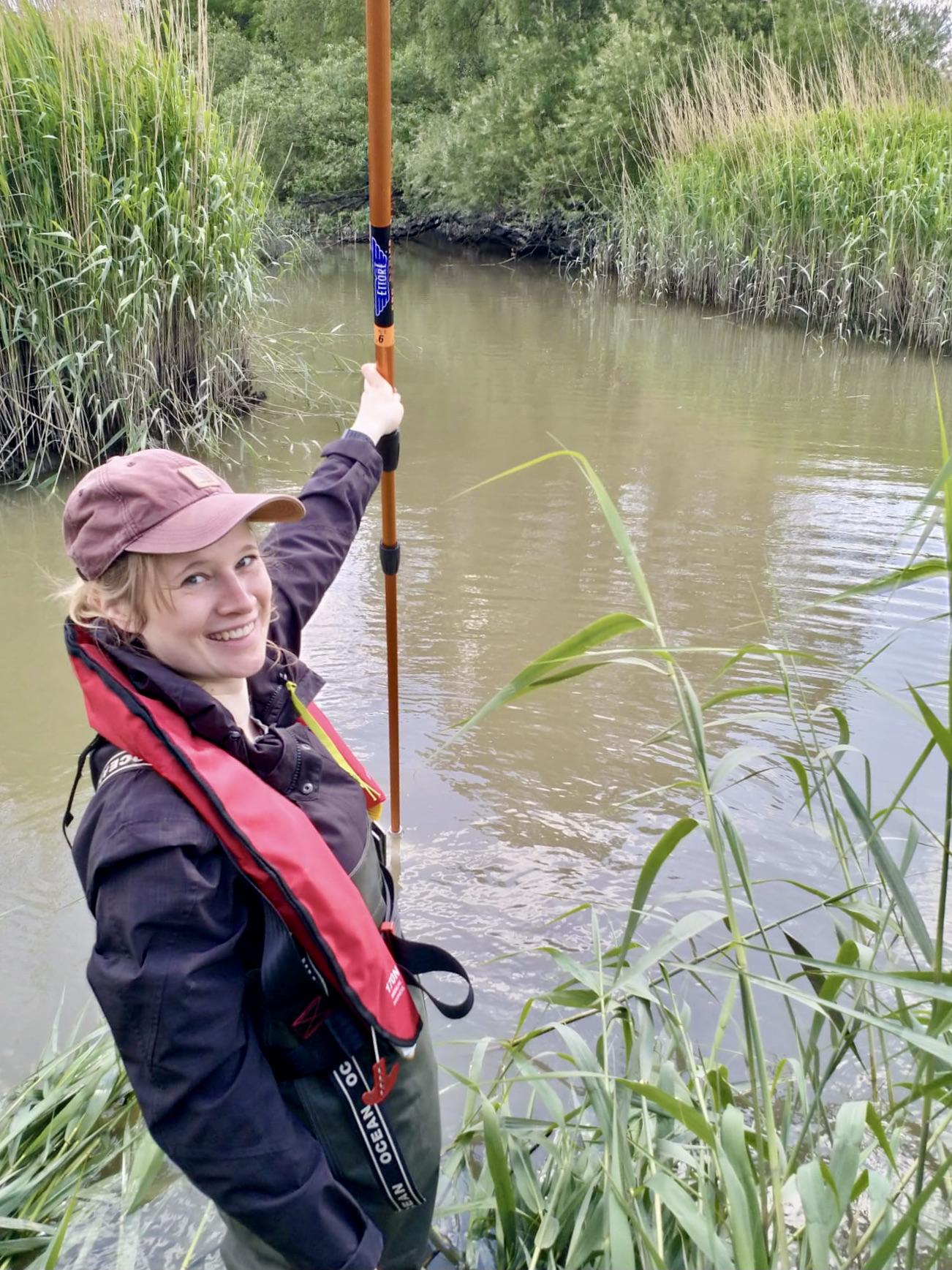
Interdisciplinary work had a particularly strong influence on me. As I was studying the food web of the Elbe estuary, it was extremely helpful to exchange ideas with other doctoral researchers who were focusing on different trophic levels. This meant that many questions could be resolved quickly. The opportunity to spend time abroad and learn new methods there has also been invaluable for my current work. Furthermore, various courses at the RTG, such as ‘Scientific Writing’ and ‘Female Empowerment’, helped me improve my writing style and approach new challenges with greater confidence.
That’s a difficult question, because no matter how well you plan something, something is bound to go wrong. When it came to sampling, there were a few minor things I would have changed. But ultimately, I was able to deal with the ‘mistakes’ and sort them out. Looking back, that’s normal and just part of the process.
It’s important to find a balance. That means taking time for yourself now and then – even if it seems difficult – and doing things that have nothing to do with your PhD thesis. I’d also recommend not constantly comparing yourself to others. Support one another and don’t work against each other.
We look forward to the alumni talks that are yet to come. The series will continue on 20 March 2026 at 4.00 pm at the Institute of Plant Sciences and Microbiology (IPM). Doctoral researchers from the second cohort of RTG 2530 are warmly invited to attend and ask their questions.

