Research Training Group 2530
RTG2530Biota-mediated effects on Carbon cycling in Estuaries
Photo: UHH/Denstorf
2 July 2026, by RTG 2530
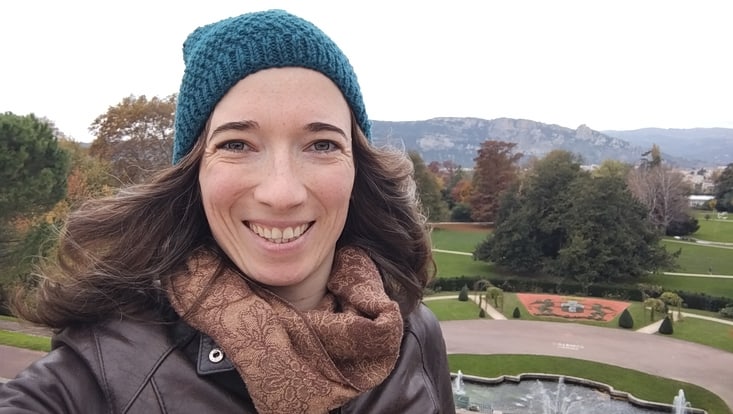
Photo: UHH/RTG2530/Beck
Miriam Beck has been part of the RTG 2530 team as a postdoctoral researcher since 1s of June 2026. We are delighted to introduce her as part of our portrait series and asked her three questions.
In my previous research, I have focused primarily on identifying changes in biodiversity and investigating their possible causes: Why do ecological species communities differ from one location to another? How do they respond to environmental changes? And what role do functional traits – that is, characteristics of organisms such as body size, lifespan or diet – play in this? In my new project, I am building on this work, but broadening my focus from species communities – that is, groups of species found at a particular site – to their interconnections.
These connections can be represented, for example, in ecological networks. A well-known example is food webs, which are essentially a ‘who eats whom’ system. Similarly, however, networks can also be created to illustrate other ecological relationships, such as which species interact with one another, which habitats are linked by nutrient flows, or which organisms form an important bridge between land and water.
In the Elbe estuary, I would like to examine such connections across different subsystems: between land and water, between different species groups, or between different types of interactions. It is particularly fascinating to identify key connection points within the network or to investigate the significance of direct versus indirect ecological effects.
It was, above all, the link between aquatic and terrestrial ecosystems that drew me to this project. Until now, I have worked both in aquatic environments – for example, with macroinvertebrates, i.e. invertebrates such as snails, insects or crustaceans, in flowing waters – and in terrestrial systems, primarily with birds. Topics such as nutrient or carbon fluxes, or the interface between water and land, have cropped up time and again – for example, in the case of aquatic insects with terrestrial life stages (e.g. dragonflies, stoneflies or mayflies) or in terms of functional characteristics – but have never been the focus of my work until now.
The greatest challenge is bringing all these connections together in such a way that they form a complete picture. It’s not just about studying individual species or processes, but about bringing together many different interactions, habitats and types of data. Yet it is precisely this complexity that makes the subject so fascinating to me!
I am curious to discover the diversity of the doctoral researchers’ projects and look forward to learning a lot about the Elbe ecosystem myself along the way!